The Mission of My Father
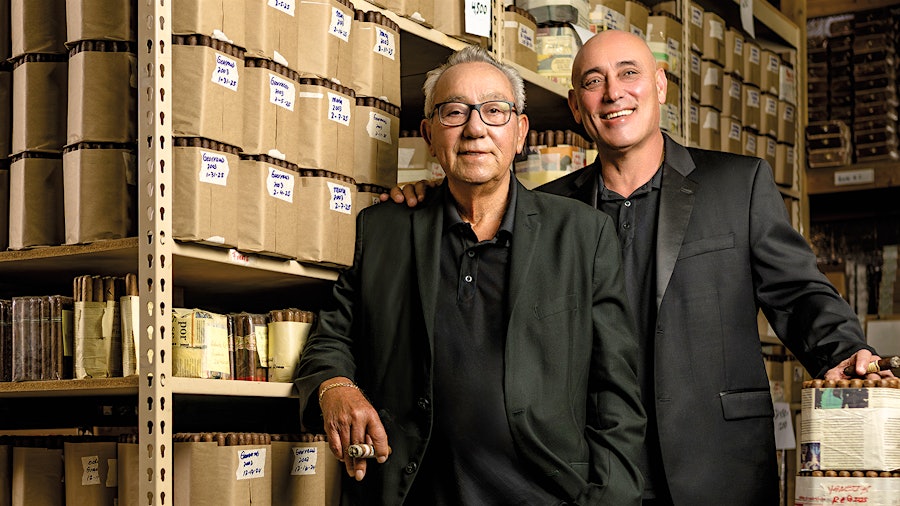
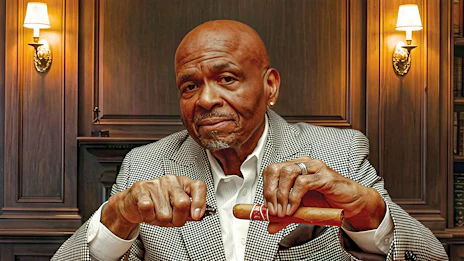
There’s a slight shuffle to José “Pepín” Garcia’s walk as he goes from table to table, inspecting the work of his congregation of cigar rollers. The room is vast with 600 employees in blue shirts concentrating on their labors, eyes down, doing things in the old Cuban way. Or at least, the old Cuban way according to Garcia, with some concessions for modernity here and there. He’s a throwback of sorts who grew up in Cuba’s cigar industry, making everything from Montecristo to Romeo y Julieta before bringing his Cubanesque style to Miami in 2003. Now, he’s 74 and the patriarch of a massive Nicaraguan operation that produces some 24 million handmade cigars annually, including the current Cigar of the Year: My Father The Judge Grand Robusto (98 points). A pair of rollers toward the front of the room are making these exact cigars as a team, as one bunches and the other applies the wrapper.
“They should make 450 by the end of the day,” Pepín says. He lowers his voice and adds with a chuckle, “but I could do that many by myself.”
This is easy to believe. Pepín was a master roller, such a high-level cigarmaker that he would teach established rollers throughout Cuba how to roll better. A teacher of teachers. He moves on to the next table, his eyes fixed on a pile of 20 or so finished cigars, and with the vision of a predatory bird, he spots an error. A girl looks up at him nervously behind the stack of cigars and looks back down. Pepín picks up a cigar and inspects the head. It has four neat seams when it should only have three. She’s gently admonished and Pepín moves on. There’s another pile of cigars at another table with much lighter Connecticut seed wrappers. One of them has a slight flaw. He picks it up, shows it to the roller and puts it aside. A reject. There aren’t too many this particular morning, but if there are more, he’ll find them.
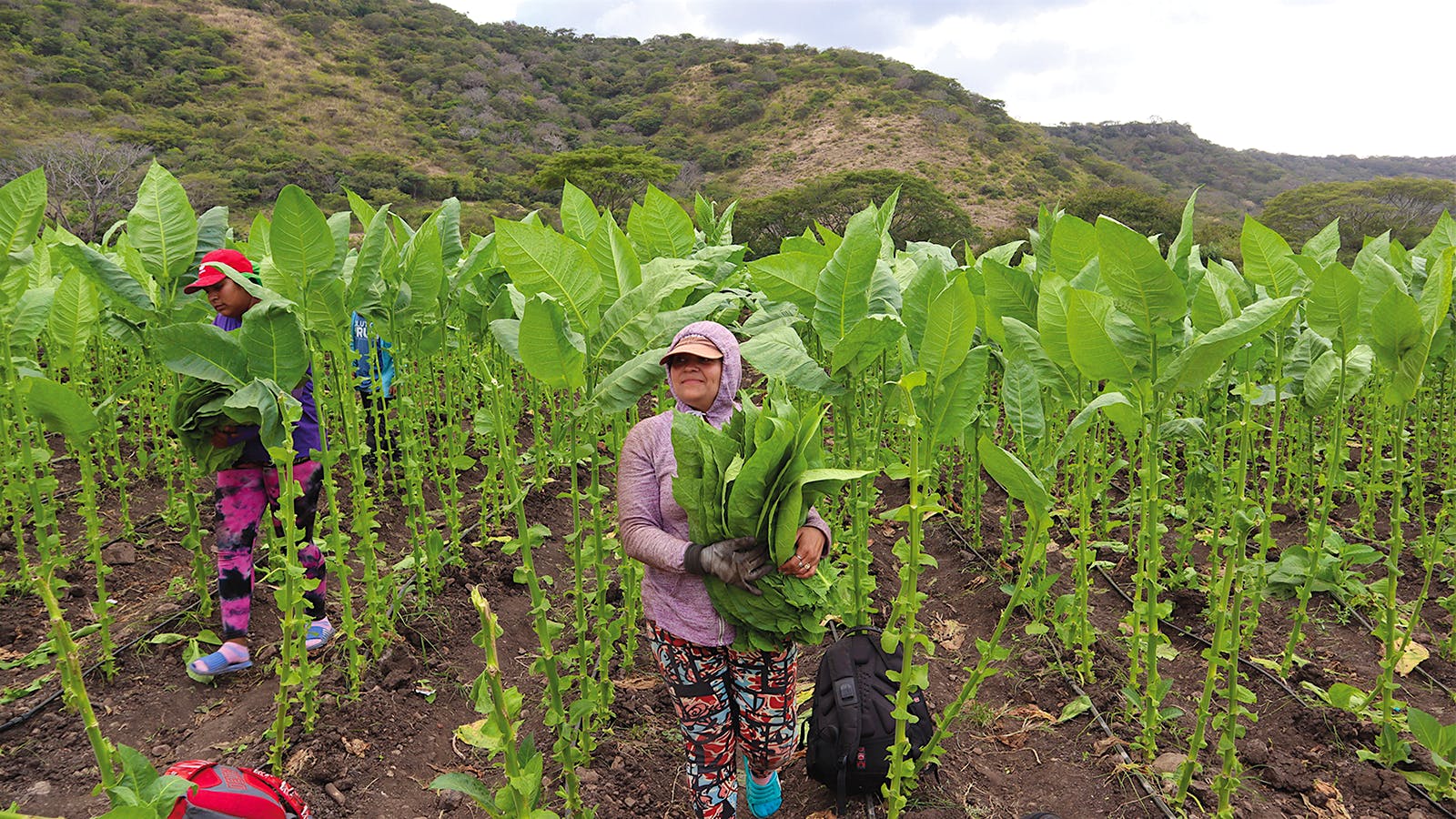
While Pepín is on the factory floor, his son, Jaime, could be in the dimly-lit fermentation rooms to inspect piles and piles of tobacco as the dry-cured leaves transform from something raw and vegetal to something sublime. Or he could be in the packaging department or maybe even in the box factory with his son Jandy, who has also become crucial to the company. A cigar factory is like a church with its daily rites and rituals, its requirements and its strict adherence to an almost liturgical code of quality. A good factory like this one anyway, and the Garcias are its ministers.
My Father Cigars is a gated compound in Estelí, Nicaragua, and the operation is impressive by any standard, but especially so when you consider the company’s humble beginnings. After early-morning inspections, the three Garcias head back to the office. They’re joined by Pepín’s wife, Maria, a stern and quiet presence, and they want to talk about the past and the present.
“I always wanted to have my own factory,” Pepín says. He’s smoking a Flor de Las Antillas, but it isn’t one of the larger ones—something closer to a corona. Pepín takes a pensive puff and says: “Because my family had a factory in Cuba since the 1930s. It was my aspiration to continue the tradition and I always wanted it to be run by family.”
Like so many in the cigar industry, the Garcia’s factory was taken over by the Castro regime and they were faced with the same rending decision: Stay, cooperate with the government and help to write a new socialist chapter in Cuba’s history, or vacate the country entirely. They chose to stay for awhile.
“On March 9, 1963 at 6 a.m. the army showed up and asked my grandmother for the key,” Pepín recalls. “She said, ‘You don’t need a key. It’s open.’ And from that day it was incorporated into the state.”
This was not in Havana, but in Baez, a small town that once had 13 privately-owned factories. The government concentrated them all into one that produced national brands for domestic consumption. Then in the 1970s, it began to roll export brands like Romeo y Julieta, H. Upmann and Montecristo, supporting the primary Havana factories. Here, Pepín perfected his craft.
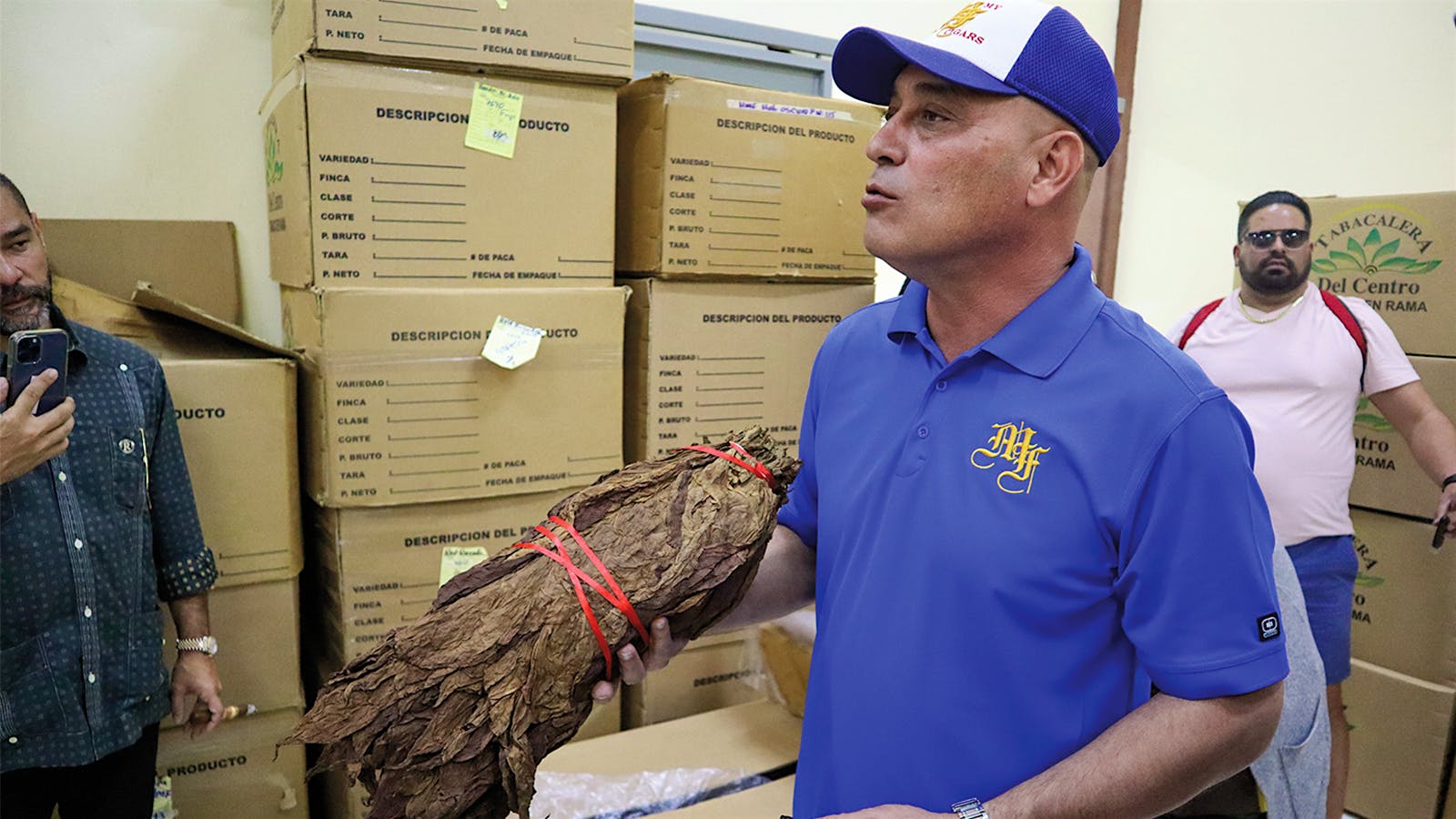
“It was a model factory,” he says. “People from Santa Clara came here to learn construction methods. I got the title of Meastro de Meastros. I was teaching the teachers.” Despite his accolades, it was a world the Garcias would choose to leave.
Leaving Cuba
“We got here because of my son’s ideas,” Pepín explains, referring to Jaime, now 54 and running operations in both the factories and the many tobacco fields the family now owns. Jaime is sitting next to his father, looks down and nods in contemplation. “I started on the agricultural end in Cuba, when I was about 16 or 17,” says Jaime. “Then I had to do military service. Every day, they told you that the enemy of Cuba was the United States. That’s what you heard. You didn’t have access to the outside world and you believed whatever you were told.”
With his shaved head and strong build, one could easily imagine Jaime as a bodyguard or commander—he looks every bit the part—but he’s soft-spoken and measured. Next to him is a tray of concept cigars and prototype blends. He picks up something covered in broadleaf, his favorite wrapper to work with, and lights up. Eventually, it will be a brand, but for now, it’s another beta-test cigar that fills the room with a bold and spicy smoke.
In between puffs, Jaime recalls how Cuba lost the economic support of the Soviet Union after that nation fell in the early ’90s, support it greatly relied on, a time in history officially known as The Special Period. Agricultural operations were especially impacted, and that’s when Jaime started working in the same factory as his father.
“I became head of quality control in the factory,” Jaime says. “Then, in 1997 I saw an issue of Cigar Aficionado. Incredible. I knew when I saw the cigars, the ratings, that I could make cigars good enough to be in the magazine. It caught my attention that Cigar Aficionado included the prices—and I knew how much the rollers were getting paid in Cuba. That gave me the idea about the situation we were in. I was the one who wanted to leave Cuba.”
They couldn’t leave together. Jaime’s sister, Janny, who’s now instrumental in managing the company’s distribution and sales force, left first in 1996 at 18 years old. Pepín and Jaime followed in 2001 and found themselves in Nicaragua.
“My sister was in the United States and met a guy named Daniel Hernandez,” Jaime says. “He was going to open a factory in Nicaragua and needed somebody to run it. He wanted to grow the factory and my father became like a coordinator, buying raw materials and preparing the blends. I stayed on the production floor.” Neither had any prior experience with any tobacco outside of Cuban leaf.
“I didn’t know that outside of Cuba there was quality tobacco,” Pepín admits. “In Nicaragua, I saw the leaves and noticed a lot of resemblance to Cuba. The varietals were Cuban and I was able to make a cigar similar to what they were making in Cuba.”
That factory eventually closed, leading the Garcias to the United States, where they opened a small factory, known as a chinchalle, in Miami’s Little Havana section. It was called El Rey de Los Habanos, and was half owned by Eduardo Fernandez of Aganorsa, who supplied them with tobacco. There were plenty of small chinchalles in Little Havana in 2003, but the attraction here was a Cuban style of construction that the United States hadn’t seen much of since before the embargo, combined with Cubanesque blends modeled after the cigars that Pepín had been rolling for most of his life. Pepín and Jaime had a few brands of their own, but recognition didn’t come until the Garcias started producing a curiously-named cigar called Tatuaje, owned by a then-unknown young man named Pete Johnson.
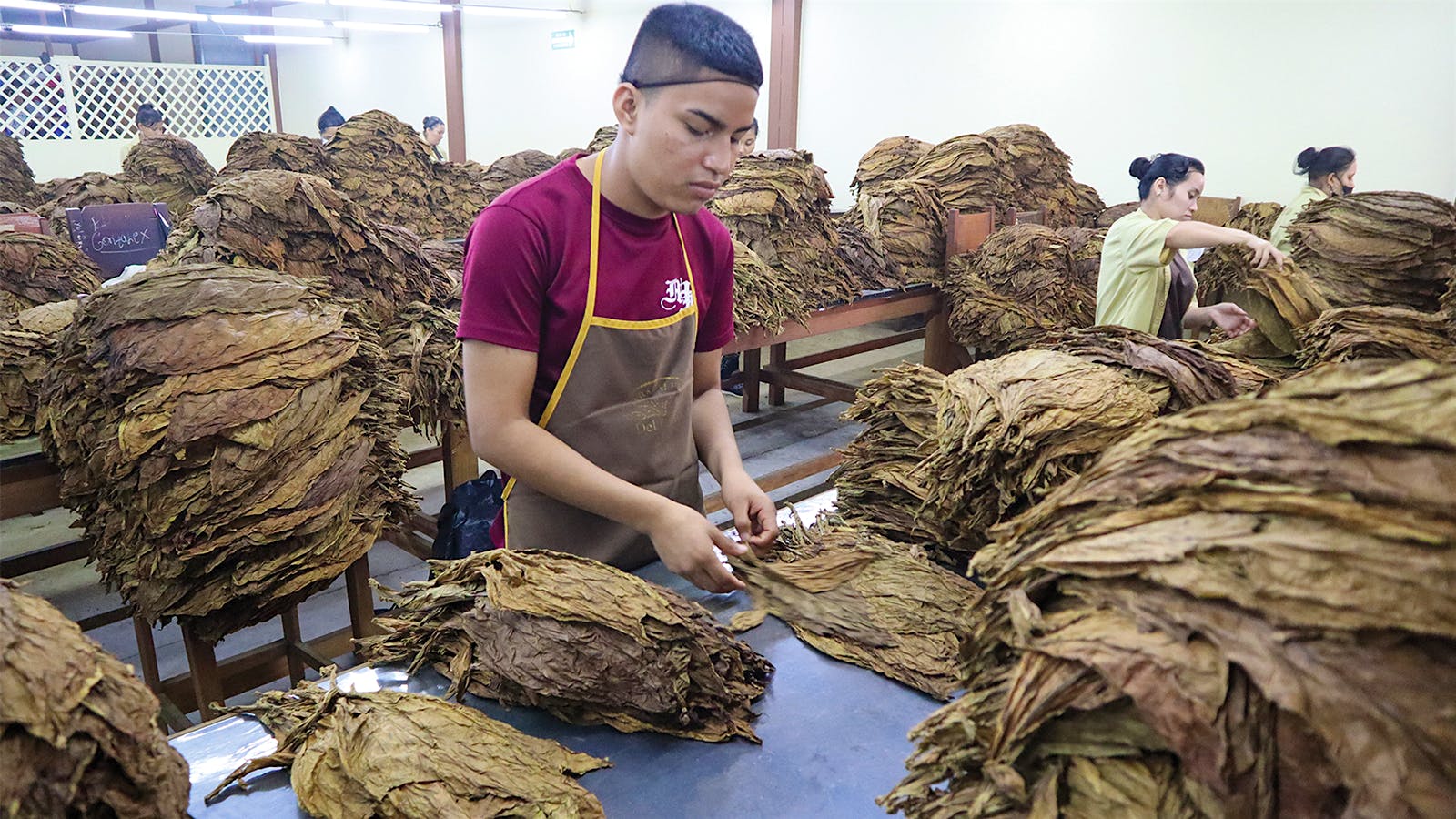
“Tatuaje was very, very important,” says Jaime. “I consider Pete Johnson the face of the new generation of brand owners. Remember in the ’90s there was a boom and the market got saturated with a lot of cigars, and not all of them were good. Then it recessed and in 2003, Tatuaje started a new wave of young people smoking. We saw it at events. There are companies that are at the top like Padrón and Fuente. They are legendary. But Pete started the new wave. The combination of Tatuaje with the way we were making cigars was changing the dynamic when we came out of the boom.”
Pepín agrees with his son’s assessment: “Pete likes quality and he’s strict about it. That goes along with our style. The quality standard is one standard.”
The style of Tatuaje was evident: full-bodied smokes made with Cuban-style construction and presented in smartly-designed boxes that resembled the slide-lid cabinets of old Cuban brands. People took notice, including this magazine, which was awarding the brand one high score after the next. Because the capacity of the small factory in Miami was so limited, Tatuajes were made in small quantities, resulting in a cult following for the brand. This lead to a halo effect, and soon other cigar companies approached the Garcias, looking, perhaps, for some of the same magic. Third-party companies like Padilla and United Tobacco were knocking on the Garcias’ door, and the Garcias obliged.
Demand was increasing, and the Garcias were quickly outgrowing the space. In 2006, they expanded to Nicaragua, building a factory eventually named Tabacalera Cubana. Aganorsa remained a partner, but a new company wanted in, and it ended up being their largest client: Ashton Distributors Inc. Ashton was looking to add a Nicaraguan cigar to its portfolio and turned to the Garcias to produce its San Cristobal brand in 2007. Two years later, the Garcias began making Ashton’s La Aroma de Cuba, previously produced in Honduras. Things were going well. The factory in Miami was still producing small amounts of Tatuaje and Don Pepin Garcia cigars while the Nicaraguan operation was picking up steam. Between the rapid, but controlled expansion, steady supply of Nicaraguan tobacco from Aganorsa and no shortage of clients, things were going quite smoothly—until they weren’t.
A Crossroads
As business expanded in Nicaragua, the Garcias once again outgrew their facilities. In 2009 they built an even larger, grander factory called My Father Cigars, named after the brand that Jaime created the year before as a sentimental dedication to his father. Fernandez had no ownership in the new factory, and in 2010 he sued the Garcias, accusing them of channeling business around El Rey de Los Habanos and Tabacalera Cubana in an effort to circumvent the partnership. Eventually, both companies settled out of court and the Garcias bought out Fernandez’s share entirely.
Now, the company needed a new source of tobacco, and crucial questions arose: Could the company maintain the character of its blends with a different tobacco supplier? And how reliable was the supply? The long-term goal was to be entirely self-sufficient, so the company started acquiring land to farm, buying plots in the major growing regions of Nicaragua.
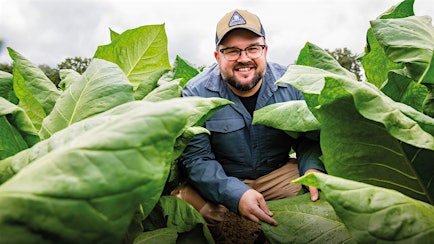
“On Sundays, we’d get out in the car and look at the different regions searching for farms,” Jaime recalls. “We’d drive by one farm and I said to the owner ‘I’ll buy the farm from you.’ He said it wasn’t for sale, so I gave him my number in case he changed his mind. Six months after, the guy showed up.” They bought their first farm in 2008 and dubbed the 30-manzana plot of land La Estrella. And they kept buying. “Any money we had was to buy more land,” Pepín adds. “It was the only way to guarantee our raw materials.”
In 2011, the company had purchased enough farms to become completely self-reliant. They no longer had to buy Nicaraguan tobacco from anyone anymore—a milestone that Jaime believes to be a major marker in the company’s timeline.
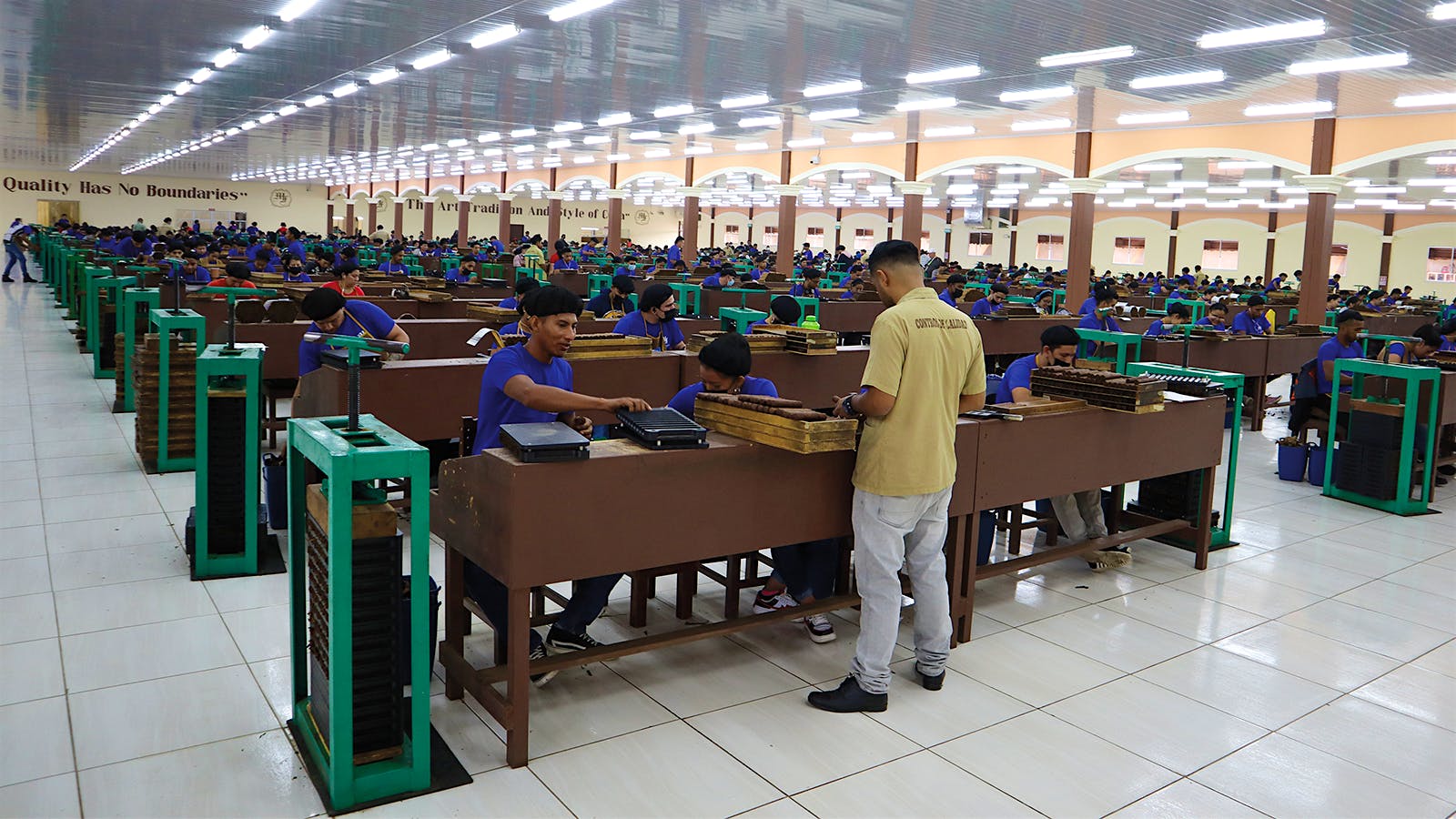
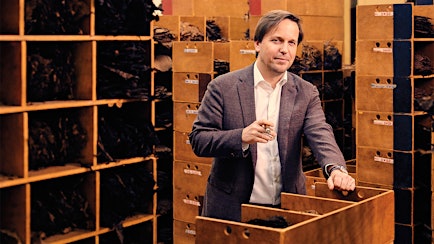
“The most important part of being autonomous is that you control the fermentation of the tobacco,” he says. “When you buy tobacco, it’s not always correctly fermented. Then you find yourself not having consistency. Sometimes we would buy tobacco completely raw to achieve the fermentation we want.”
Today, the Garcias own nearly 20 farms in Nicaragua, growing tobacco in Estelí, Jalapa, Condega and Namanji, plus all the necessary tobacco-processing facilities to properly care for the inventory. If you’re wondering whether or not vertical integration and its huge investment has paid off, consider this: In 2012, the company was awarded Cigar of the Year from this magazine for its Flor de Las Antillas Toro. Four years later, it won the accolade again, this time for the My Father Le Bijou 1922 Torpedo Box Pressed. And now, the company is once again the current title holder, winning Cigar of the Year in 2024 for My Father The Judge Grand Robusto, a rich, complex cigar that’s made of approximately 75 percent Estelí tobacco. The rest is a mix of Condega and Jalapa, making this a quintessential Nicaraguan blend.
Last year, My Father Cigars in Estelí produced 24 million cigars, with 28 percent of that production dedicated to third-party lines, including Tatuaje, Ashton, Crowned Heads and Foundation Cigar Co. Its bestselling brand is Flor de Las Antillas, followed by the full combined suite of the My Father series: the core line, Le Bijou, La Opulencia, The Judge and Gran Oferta. All told, including the tobacco farms, the Garcias employ around 5,500 people.
In Miami, the small El Rey de Los Habanos factory has been relocated to Doral where the company makes its U.S. headquarters. There, in a small space behind the warehouse, the factory produces the Tatuaje brown label as well as the original Don Pepin Garcia Blue label. It’s all done under the management of Pepín’s daughter and company vice president, Janny.
“She has all the control of the distribution,” Jaime says of his sister, who spends most of her time in Miami. “She directs the sales team—17 salesmen on the road—and everything that happens in the United States. At the beginning, we didn’t have experience with the U.S. market. Pete helped us a lot. So did Ashton because they would explain how the sales teams worked, and we started learning.”
Jaime’s son, Jandy, has also become vital to the operation, learning every aspect of the business, from agricultural to industrial. “It’s been an incredible experience having my father and grandfather as mentors and teachers” says the 27-year-old, who also spends most of his time in Nicaragua. “I realized my dream was to work with them at the end of my teenaged years.”
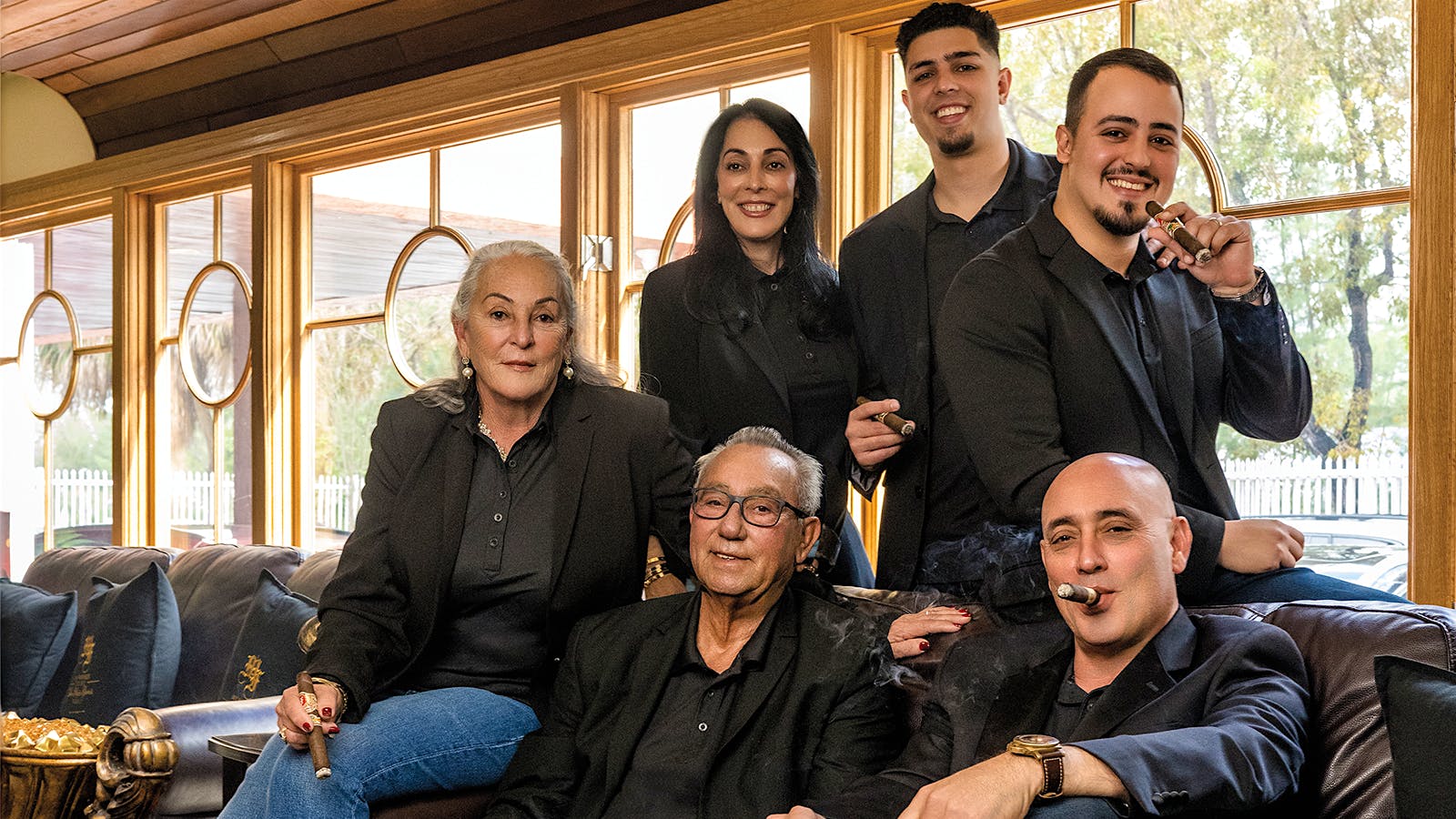
Jandy is reluctant to talk about himself, preferring to steer the conversation to his elders, which is why so few people are aware of his blossoming talents. He blended the My Father Le Bijou 100 Años—a limited-edition smoke that was named the No. 13 cigar of 2023 for the Corona Especial size. We called it “the finest My Father we smoked all year.”
The Next Chapter
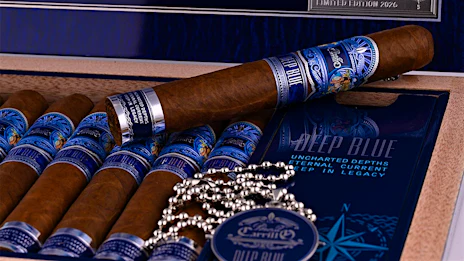
It’s afternoon now and the family has broken for lunch back at their house, where they all live together. This midday meal is part of the daily routine and is as important to them as making the daily rounds throughout the factory. Meals strengthen bonds. The topic of conversation is Honduras. My Father Cigars has expanded north by acquiring fields and building a factory in Danlí. This year saw the release of its first Honduran cigar, called My Father Blue.
Honduras is still largely uncharted territory for the Garcias, but they seem to be following in the footsteps of other great tobacco families like the Plasencias, who operate out of both countries as well. At no point, however, does their success make them forget how much time they had to spend apart and the sacrifices made to get to this point.
Back in the office, everyone can light up again—oddly there’s no smoking inside the Garcia household. “I’m happy now,” says a content Pepín, now puffing one of his Honduran cigars. “I have achieved what only a few people have achieved, having three generations thinking in the same way with good communication between all of us. If there’s another family like that, show it to me.”